

Trekking routes to Roopkund, Bedni and Har Ki Dun set to reopen as Forest Department issues compliance order
Mussoorie | AntarSaga
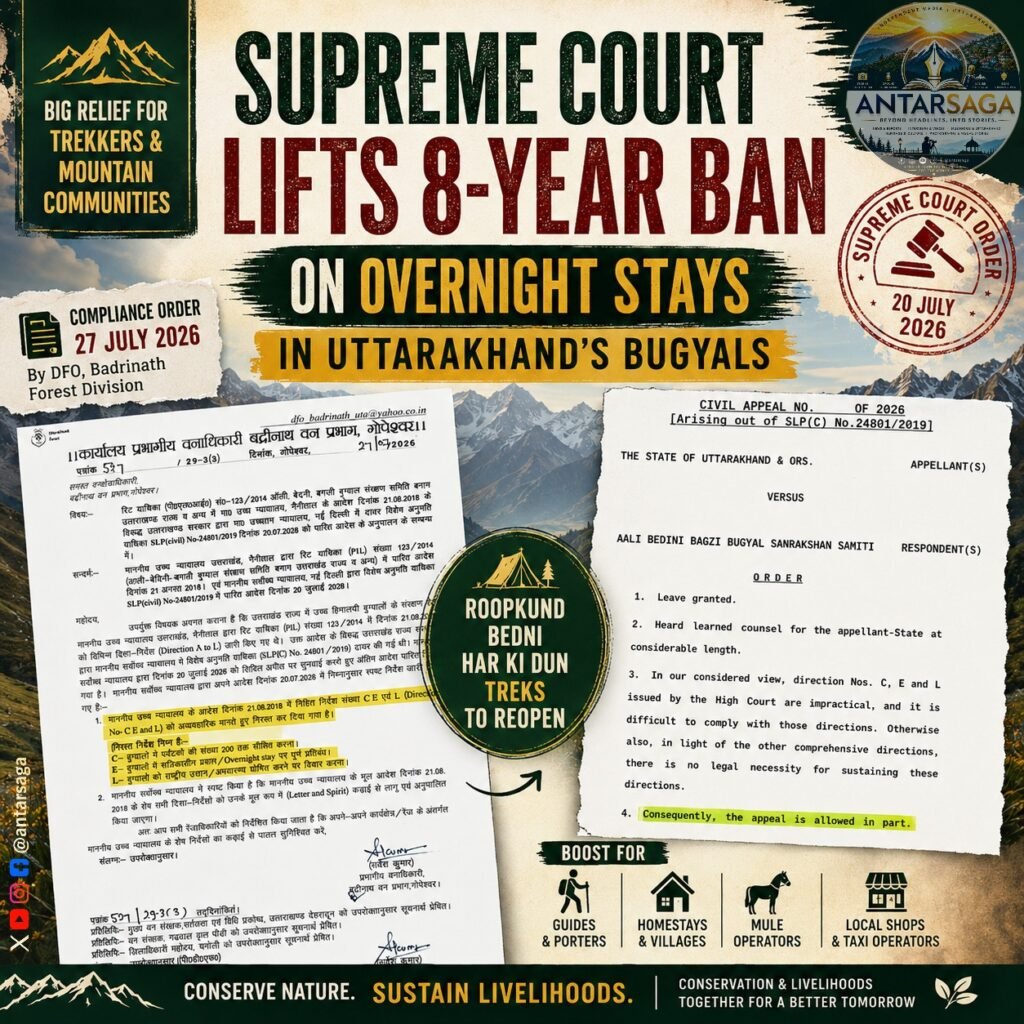
After nearly eight years, trekkers will once again be able to spend the night in Uttarakhand’s high-altitude bugyals. In a significant ruling for Himalayan tourism and mountain livelihoods, the Supreme Court has lifted the blanket prohibition on overnight stays imposed under the Uttarakhand High Court’s 21 August 2018 judgment, paving the way for the revival of iconic trekking routes including Roopkund, Bedni and Har Ki Dun.
The ban originated from a Public Interest Litigation filed by the Aali-Bedini-Bagzi Bugyal Sanrakshan Samiti over concerns about environmental degradation in the state’s fragile alpine meadows. The High Court’s 2018 order prohibited overnight stays in bugyals, effectively making destinations such as Roopkund and Bedni inaccessible for conventional trekking itineraries, while requiring trekkers on routes like Har Ki Dun to descend the same day rather than camp in the meadows.

In its 20 July 2026 judgment, the Supreme Court held that Directions C, E and L of the High Court’s order were impractical and set them aside. These provisions related to limiting visitors to 200, prohibiting overnight stays in bugyals, and considering the declaration of bugyals as National Parks or Wildlife Sanctuaries.
Following the ruling, Sarvesh Kumar, Divisional Forest Officer, Badrinath Forest Division, issued a compliance order dated 21 July 2026, directing all Range Forest Officers to implement the Supreme Court’s decision while continuing to enforce the remaining directions of the High Court in both “letter and spirit.”
The decision is expected to revive the trekking economy across Uttarakhand’s mountain regions. Around the Roopkund base camp at Lohajung, villages including Wan, Didna, Kuling and Mundoli witnessed a sharp decline in tourism after the overnight-stay ban came into force, forcing several homestays and trekking-related businesses to shut down.

Local representatives, including Block Pramukh Tejpal Rawat, Zila Panchayat member Urmila Bisht, Balbir Ram, Roopkund Tourism Development Sangharsh Samiti president Indra Singh Rana, and Eco Samiti Wan president Trilok Bisht, welcomed the ruling, saying it would restore employment for hundreds of local guides, porters, mule operators, tour organisers, homestay owners, shopkeepers and taxi operators who depend on trekking tourism.
In Osla village, the gateway to the Har Ki Dun trek, Surendra Rana, founder of TrekTheHeaven.in , described the decision as a major relief for the local trekking industry. He said trekkers would no longer be forced to descend from Har Ki Dun on the same day and would once again be able to spend a night beneath the stars in the high-altitude meadows, making the experience more rewarding while providing a meaningful boost to local livelihoods.
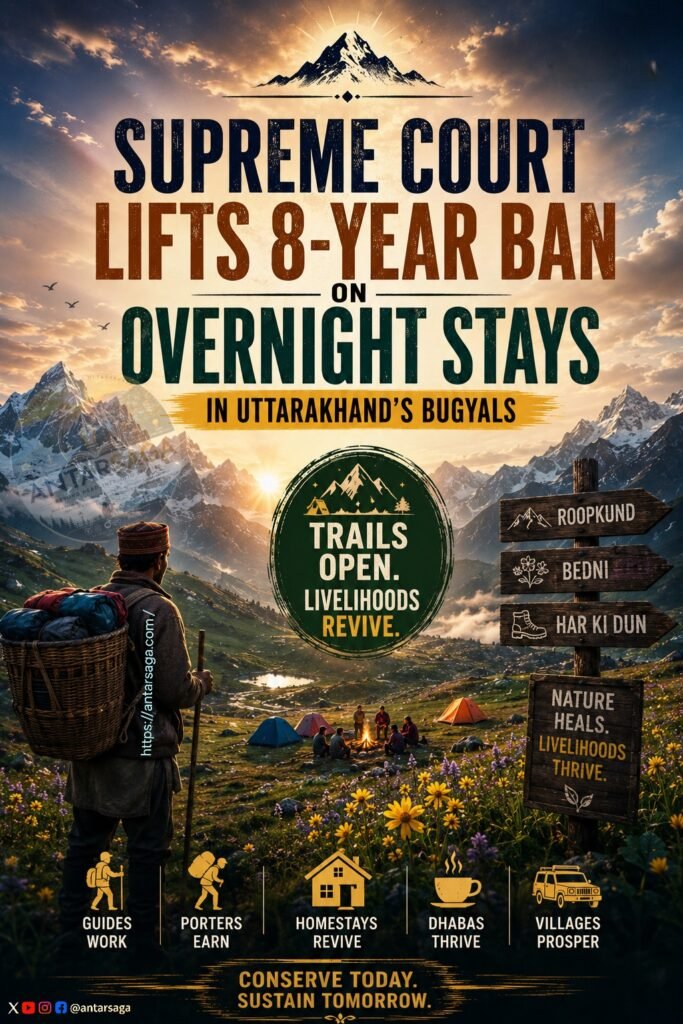
The Supreme Court’s ruling does not dismantle the broader environmental framework established by the High Court in 2018. While it removes the blanket prohibition on overnight stays and two other provisions found to be impractical, all remaining environmental safeguards continue to remain in force. Forest officials have been instructed to ensure strict compliance with those measures to safeguard Uttarakhand’s fragile Himalayan ecosystems.
For thousands of families across Uttarakhand’s Himalayan villages, the ruling offers more than the return of overnight trekking. It revives a fragile mountain economy built on guides, porters, homestays, mule operators and small local businesses, while reaffirming that conservation and livelihoods need not stand on opposite sides of the trail.