Potholes, Illegal Malwa Dumping and Broken Promises Turn the Queen of the Hills into a Daily Hazard.
A Hill Town Built on Beauty Cannot Afford Roads Built to Fail.
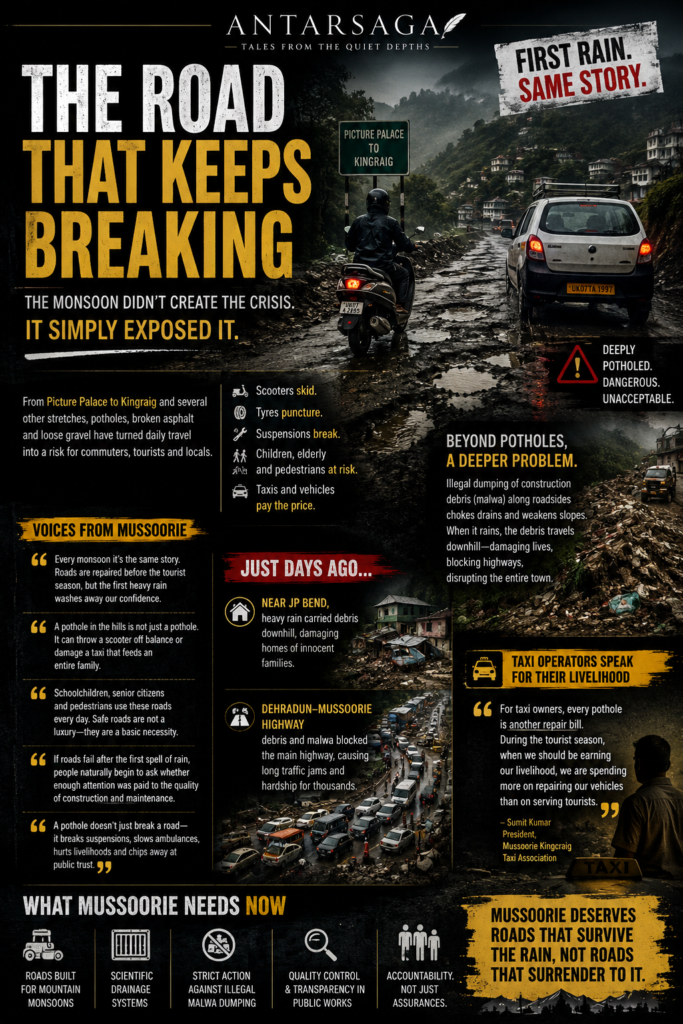
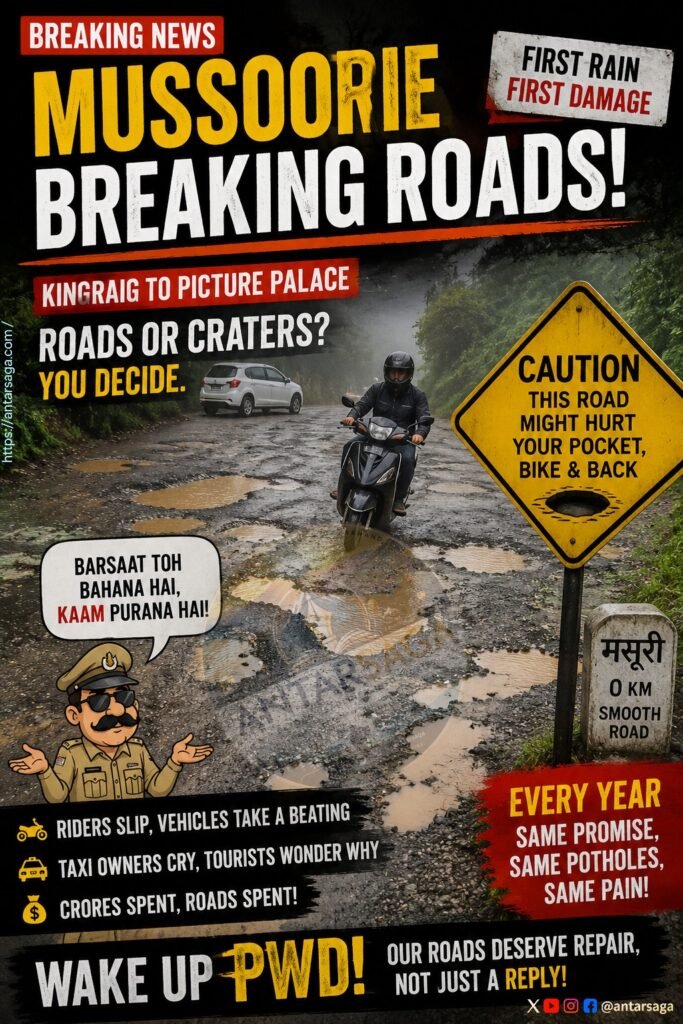
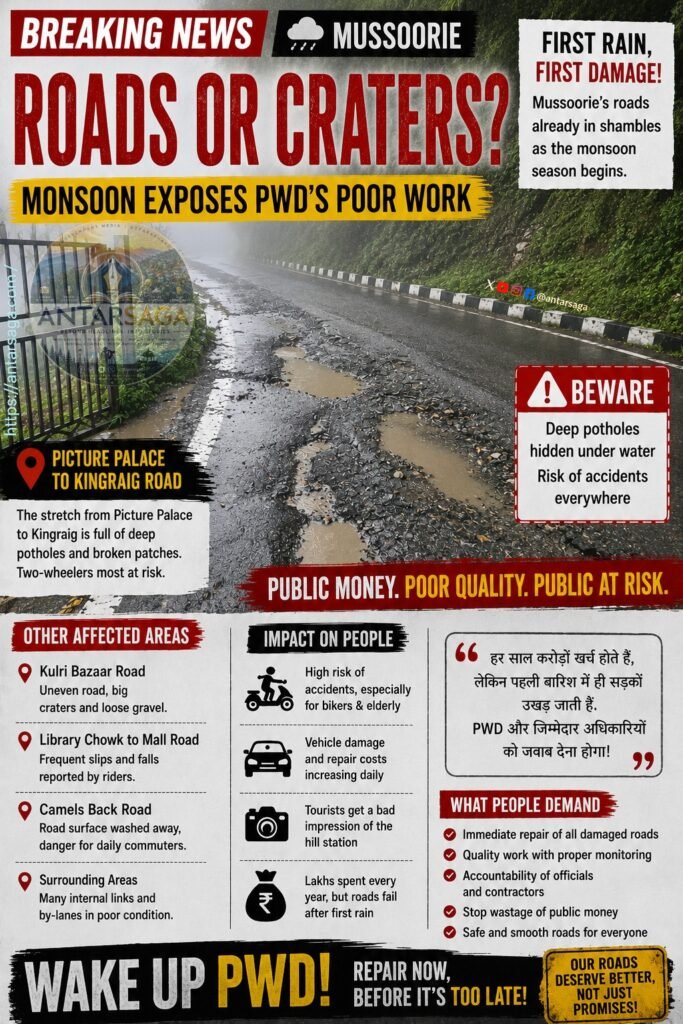
Mussoorie: The season’s first spell of heavy rain has once again exposed the fragile condition of roads across the Queen of the Hills. From Picture Palace to Kingraig, and several other stretches of the town, potholes, broken asphalt and loose gravel have turned everyday travel into a safety hazard for residents and visitors alike.
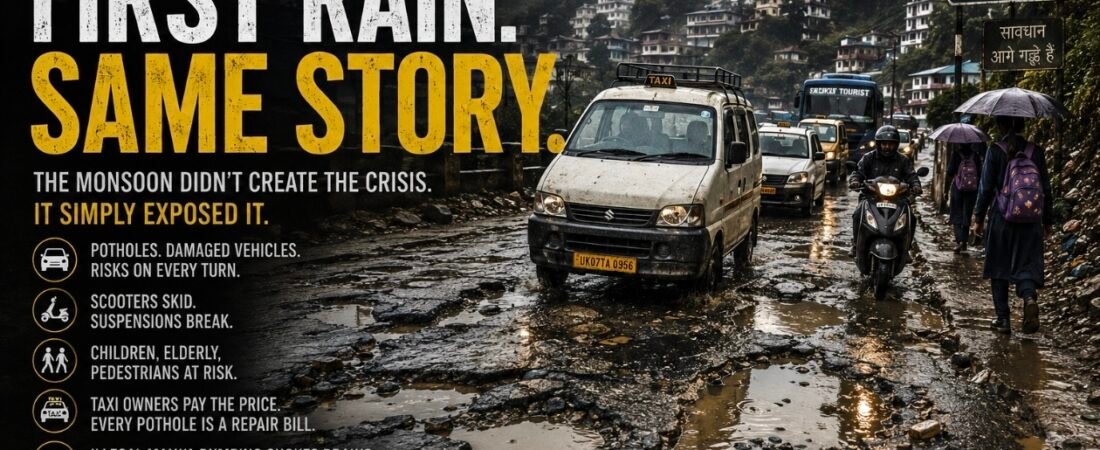
Rainwater now conceals deep potholes, making them almost impossible to spot. Scooters and motorcycles risk skidding, cars and taxis suffer repeated damage to tyres, suspensions and wheel alignments, while pedestrians—including schoolchildren and senior citizens—must negotiate roads that have become increasingly unsafe. For many taxi owners, every pothole means another repair bill during the peak tourist season, directly affecting their livelihoods.
Every year, the Public Works Department (PWD) undertakes road repairs before the tourist season. Yet with the very first heavy rainfall, many of these roads have already begun to deteriorate, raising fresh questions about the quality, durability and supervision of the work. Residents are asking a simple question: Are Mussoorie’s roads being built to withstand a Himalayan monsoon, or merely to survive until it arrives?
The problem extends beyond damaged roads. Illegal malwa dumping along roadside slopes continues to choke drains and weaken the hillside. Only days ago, heavy rainfall near JP Bend carried debris downhill, damaging homes, while debris and mud on the Dehradun–Mussoorie Highway contributed to major traffic disruption, reminding everyone that neglect in the hills rarely remains confined to one location.
The consequences are measured not only in broken roads, but in damaged vehicles, delayed ambulances, disrupted tourism, rising maintenance costs, and the daily anxiety of those who travel these roads for work, school and essential services.
As one resident put it:
“A pothole doesn’t just break a road—it breaks suspensions, hurts livelihoods, delays ambulances and chips away at public trust.”
Another local observed:
“Tourists come to experience the beauty of Mussoorie, not to remember its broken roads.”
The President of the Mussoorie Kingcraig Taxi Association said:
“For taxi owners, every pothole is another repair bill. During the tourist season, when we should be earning our livelihood, we are spending more on repairing our vehicles than on serving tourists.”
Residents are now demanding immediate repairs, stricter action against illegal malwa dumping, improved drainage systems and greater accountability in road construction and maintenance.
A mountain road is more than asphalt. It carries livelihoods, children on their way to school, tourists, emergency services and the confidence of an entire town. When it begins to crumble after the first rain, the damage goes far beyond the surface.