84 sq. km study identifies 15% of Mussoorie in high to very high landslide-risk zones; environmental concerns intensify over rapid infrastructure expansion.
Mussoorie/Dehradun: A peer-reviewed scientific study by the Wadia Institute of Himalayan Geology (WIHG) has reignited debate over the future of infrastructure development in Mussoorie, with environmental campaigner Anoop Nautiyal urging citizens to closely scrutinise proposed “connectivity” projects in the fragile Himalayan region.
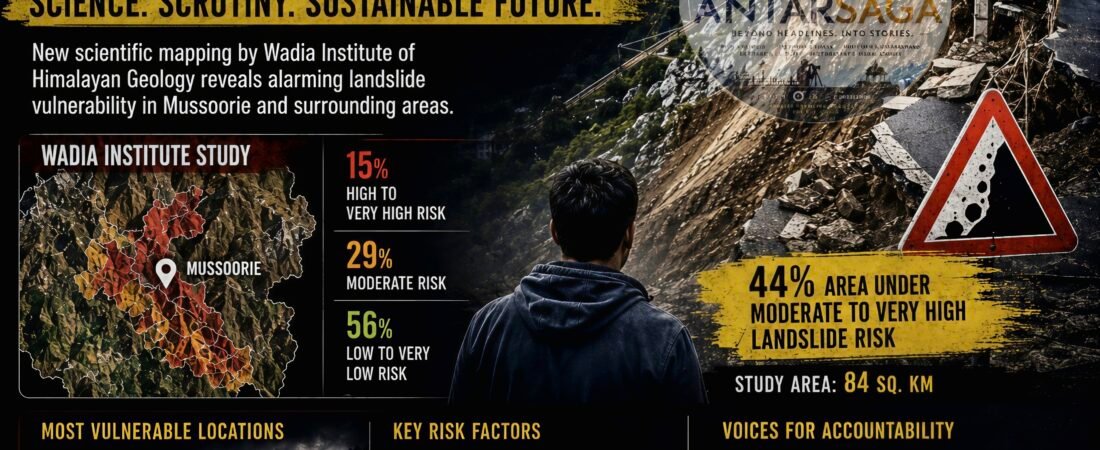
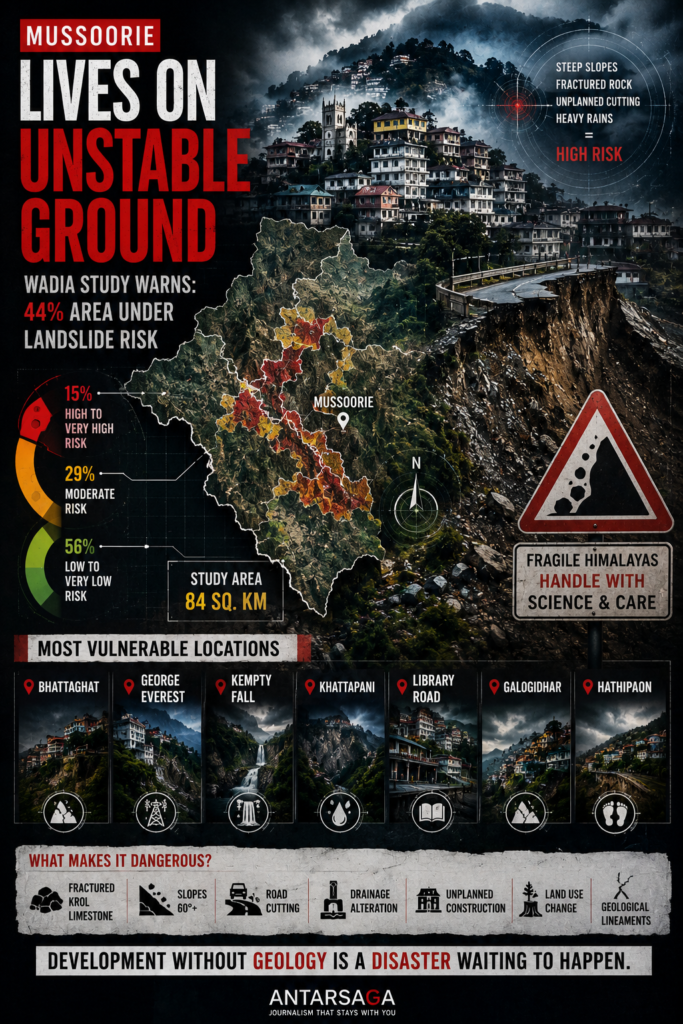
The Wadia study, covering 84 square kilometres of Mussoorie and its surrounding areas using high-resolution satellite imagery, GIS mapping and statistical modelling, found that 15% of the region falls under high to very high landslide susceptibility, while another 29% is classified as moderately susceptible. In effect, nearly 44% of the study area faces some degree of landslide risk, making scientific planning a critical necessity.
Researchers identified Bathaghat, George Everest, Kempty Fall, Khattapani, Library Road, Galogidhar and Hathipaon among the most vulnerable locations. The study attributes slope instability not only to the area’s fractured limestone geology and steep gradients but also to factors such as road cutting, land-use changes, drainage alteration and unplanned construction. It recommends that such scientific mapping be used to guide land-use planning and future development decisions.
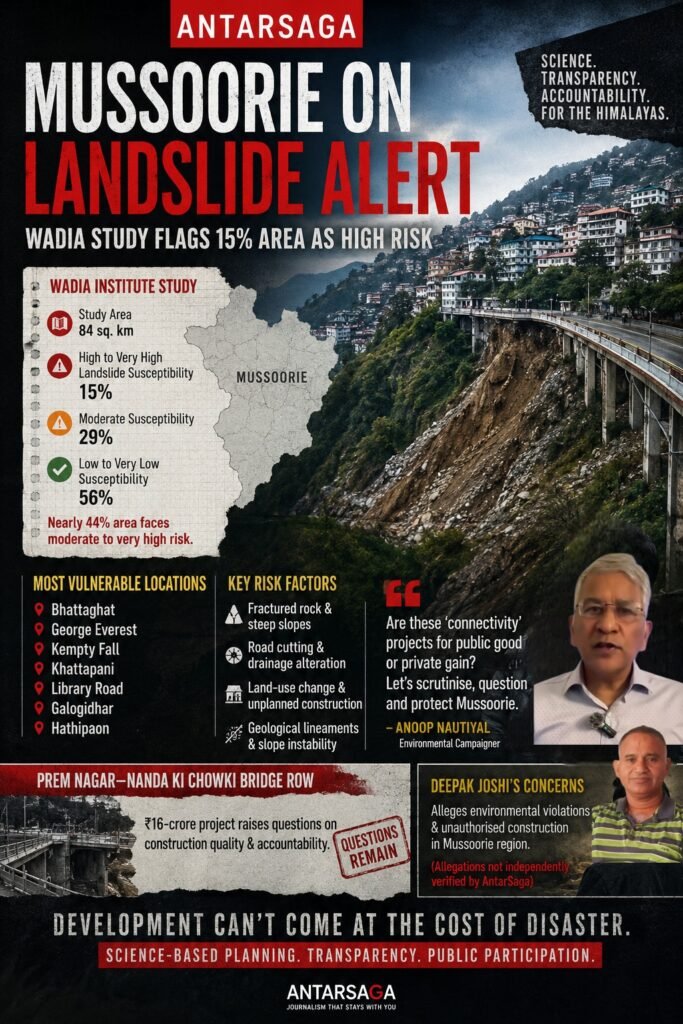
Referring to these findings, Anoop Nautiyal questioned whether several proposed “connectivity” projects are being designed solely for public convenience or whether they may also benefit private land interests. He argued that infrastructure projects in ecologically fragile regions must be subjected to rigorous scientific assessment, transparency and public scrutiny. Nautiyal also pointed to the ₹16-crore Prem Nagar–Nanda Ki Chowki bridge and approach road controversy as an example that, in his view, raises questions about construction quality and accountability.
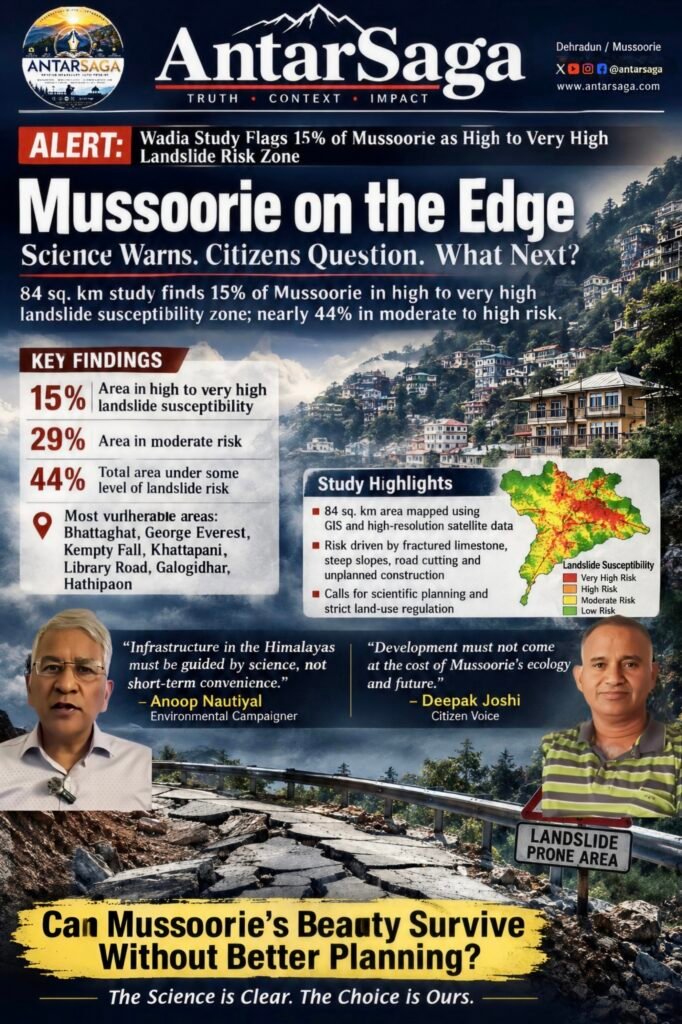
In his public statement, Anoop Nautiyal also acknowledged citizen activist Deepak Joshi for his inputs on the issue. Deepak Joshi has consistently raised concerns over Mussoorie’s fragile ecology and has been urging greater environmental accountability and scientific scrutiny of development activities in the region. Their combined voices reflect a growing public demand that the Himalayas be planned with science, transparency and long-term ecological responsibility. The specific allegations made in those posts have not been independently verified by AntarSaga.
As Mussoorie continues to witness increasing pressure from roads, tourism and urban expansion, the Wadia study adds scientific weight to a growing public debate: Can development in the Himalayas continue without first respecting the ecological limits of one of India’s most fragile mountain landscapes?